

暂无商品咨询信息 [发表商品咨询]
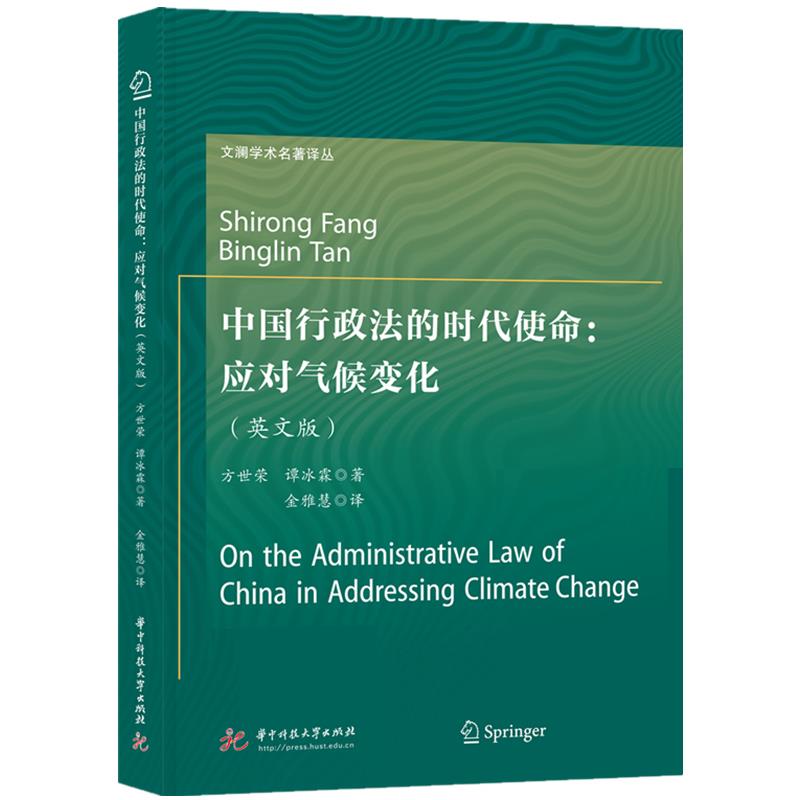
本书是目前中国行政法领域第一部致力于低碳行政的法律专著。书中对中国行政法在低碳领域变革和发展的总结具有鲜明的中国特色,这一中国特色为对中国法律,特别是行政机构依法治国感兴趣的研究者和其他人员提供了鲜活的研究参考素材,也填补了中国低碳行政研究在世界低碳行政研究的空白,为后续更深入的研究提供可靠的理论基础。本书涉及到行政法、环境法和环境学三学科交叉,为国内外多学科研究者提供了创新的研究思路。本书涉及到中外行政法在低碳领域发展的重点内容的对比,为国外低碳行政研究提供了新的视角和详实的中国特色的对比素材,对国际社会应对气候变化的努力,对各国行政机关低碳行政的发展交流等方面都能提供可靠的理论和实践借鉴意义。本书是第一本从行政法视角为政府“建设美丽中国”和“加强气候变化国际合作”政策提供理论支持的专著。本书为法律界进一步探讨气候变化的法律问题提供了参考,也为实务界做出相关决策提供了参考,理论与实际意义兼具。本书为第一本全面总结中国行政法在应对气候变化制定相应政策上如何一步步发展的专著。
积极应对全球气候变化,实现经济社会发展的绿色低碳转型,需要全社会成员的共同参与建设。在这个过程中,政府将具有不可替代的作用,促进低碳经济发展和低碳社会建设已成为当代政府的新型行政职能。行政法作为调整、规范行政机关职权职责和行政行为的重要部门法,必须作出适应时代要求的变化和发展。本书以行政法的基本内容构造为分析框架,梳理了从 1990 年到 2015 年间我国行政法为应对气候变化而做出的调整与发展,从约束政府自身活动符合低碳要求和促使政府有效履行低碳规制的新型职能两个维度,系统研究了行政法基本原则、行政主体、行政行为、行政程序、行政责任等理论和制度的应有变革和发展,对我国行政法的理论和制度如何适应低碳时代的要求提出了新的思考。
方世荣,男,1956年12月出生,安徽省歙县人。1982年本科毕业于湖北财经学院法律系,1999年在北京大学获宪法学与行政法学专业博士学位。现为中南财经政法大学法学院院长,校学术委员会副主任,校博士生导师评审领导小组成员。主要研究方向为行政法、行政诉讼法、比较行政法、行政决策学 。
教授课程:《行政法学》、《行政诉讼法学》、《外国行政法》
教学成果:《行政法原理与实务》为普通高等教育“十一五”国家级规划教材
《行政法与行政诉讼法》入选国家精品课程和教材。
科研成果
曾分别在美国乔治城大学、加州大学洛杉矶分校、德国哥德大学等做高级访问学者。多次赴美国、法国、德国、俄罗斯、巴西等国家参加国际学术会议和做学术报告。主持承担有国家社科基金重点项目、教育部哲学社会科学重大课题攻关项目、教育部人文社会科学重点基地重点项目、教育部人文社会科学重点基地重点项目、湖北省社科基金重点项目、中国法学会重点项目、国际合作科研项目等10多项。
科研成果曾获全国党校系统优秀科研成果一等奖、二等奖,全国行政学院系统优秀科研成果一等奖,司法部优秀法学论文奖,司法部优秀著作二等奖,司法部优秀教材二等奖、三等奖,国家社科基金优秀项目三等奖,湖北省人民政府社科优秀成果著作二等奖、优秀论文三等奖等部省级以上奖励近30项。曾获中国法学会全国优秀法学论文奖;湖北省优秀法学科研成果奖;司法部“七五”、“八五”、“九五”期间优秀论文奖;司法部优秀教材奖;湖北省教委科技创新与成果转化推广奖;湖北省人民政府优秀科研成果著作二等奖等部省以上奖励10多项。
主要著作
出版的学术专著和主编的教育部“十一五”国家级规划教材、司法部统编教材等主要有:《论具体行政行为》、《论行政相对人》、《行政法律关系研究》、《权力制约机制及其法制化研究》、《见义勇为及其行政法规制》、《中国公务员法通论》、《行政法原理与实务》、《行政法与行政诉讼法学》、《行政诉讼法学》、《行政诉讼法案例教程》等30多部。在《法学研究》、《中国法学》等重要学术刊物发表《论行政时效制度》等学术论文160余篇。出版《论行政相对人》等25部学术著作。在《中国法学》、《法学研究》等学术刊物发表《略论政府的行政立法职权》等文章80余篇,约20篇论文被《新华文摘》、《人大报刊复印资料(法学)》等转载或介绍。
Chapter 1 Response of Administrative Law to Climate Change …………… 11 Addressing Climate Change: Contemporary Mission of Administrative Law ......................................................................... 11.1 Legal Adjustment to Address Climate Change....................... 11.2 Specific Role of Administrative Law in the Construction of Low-Carbon Society............................................................... 12 Two Important Aspects of Administrative Law in Addressing Climate Change................................................................................ 62.1 Administrative Activities of Public Institutions Should Meet the Low-Carbon Requirements............................................... 62.2 Urging the Government to Effectively Perform the New Functions of Low-Carbon Regulations................................... 73 Responding to the Low-Carbon Era: Reflections on the Basic Contents of Administrative Law.................................................... 103.1 Basic Contents of Administrative Law................................. 103.2 The Basic Contents of Administrative Law Have Not Yet Fully Addressed Low-Carbon Related Problems.................. 14Chapter 2 Study on Low-Carbon Administrative Principle …………………181 Basic Principles of Traditional Administrative Law and Their Historical Limitations.................................................................... 181.1 Main Contents of Basic Principles of Traditional Administrative Law .............................................................. 181.2 Historical Limitations of Basic Principles of Traditional Administrative Law .............................................................. 202 Proposal of Low-Carbon Administrative Principle ....................... 242.1 The Need to Establish Low-Carbon Administrative Principle................................................................................ 24中国行政法的时代使命:应对气候变化(英文版) II2.2 Legal Basis of Low-Carbon Administrative Principle.......... 283 Basic Parts of Low-Carbon Administrative Principle ................... 313.1 Administrative Value Goal of Ecological Protection Priority .................................................................................. 313.2 Administrative Actions Requirements for Energy Conservation and Emission Reduction................................. 333.3 Strengthening the Administrative Mode of Ecological Environment Risk Management ........................................... 373.4 Building a New Low-Carbon Administrative Performance Management System ....................................... 38Chapter 3 Research on Low-Carbon Administrative Entity …………………441 Organization Law Elements of Administrative Entity................... 452 Low-Carbon Regulation of Institutional Elements of Administrative Entity..................................................................... 462.1 The Non-Low-Carbonization Practices in Institutional Elements................................................................................ 462.2 Path Selection of Low-Carbonization of Institutional Elements................................................................................ 483 Low-Carbon Regulation of Personnel Elements of Administrative Entity..................................................................... 513.1 The Non-Low-Carbonization Practices in Personnel Elements............................................................... 513.2 The Path Selection of Low-Carbonization of Personnel Elements................................................................................ 524 Low-Carbon Regulation of Material Support Elements of the Administrative Entity..................................................................... 534.1 The Non-Low-Carbonization Practices in Material Support Elements.................................................................. 534.2 Path Selection of Low-Carbonization of Material Support Elements.................................................................. 545 Improvement of Organization Law for Low-Carbonization of Administrative Entity..................................................................... 605.1 Establishing the Principles of Low-Carbon Organization Law ................................................................. 605.2 Setting Low-Carbon Behavior Modes.................................. 615.3 Adding Legal Liability Clauses............................................ 64Chapter 4 Research on Low-Carbon Administrative Procedures ……………661 Types of Traditional Administrative Procedures and Their Defects in Low-Carbon Era ................................................. 681.1 Basic Types of Administrative Procedures........................... 68Contents III1.2 Defects of Management Procedures.................................... 711.3 Defects of Adjudicative Procedures...................................... 731.4 Defects of Participatory Procedures ..................................... 742 Elements and Requirements of Low-Carbon Administrative Procedures...................................................................................... 752.1 Importance of Constructing Low-Carbon Administrative Procedures............................................................................. 752.2 Basic Elements of Administrative Procedures...................... 762.3 Requirements for Low-Carbon Procedures in Terms of Subject .................................................................................. 782.4 Requirements for Low-Carbon Procedures in Terms of Time....................................................................... 822.5 Requirements for Low-Carbon Procedures in Terms of Space...................................................................... 853 Construction of Low-Carbon Administrative Procedures ............. 973.1 Establishing Simplified and Low-Carbon Procedural Principles .............................................................................. 973.2 Basic Systems of Low-Carbon Administrative Procedures.. 98Chapter 5 Improving the Administrative Legislation for Low-Carbon Regulation ………………………………………………………… 1011 Strengthening the Administrative Legislation for Low-Carbon Consumption................................................................................ 1031.1 Meaning of Low-Carbon Consumption.............................. 1031.2 Current Status and Problems of the Administrative Legislation for Low-Carbon Consumption......................... 1041.3 Necessity of Strengthening the Administrative Legislation for Low-Carbon Consumption......................... 1151.4 Improvement of the Administrative Legislation for Low-Carbon Consumption ................................................. 1172 Resources for the Effective Implementation of Low-Carbon “Soft Law” Should Be Fully Allocated in the Law Formulation.................................................................................. 1262.1 Application of Soft Law in the Construction of a Low-Carbon Society........................................................... 1262.2 Proposal for Ensuring the Effective Implementation of Soft Law.............................................................................. 1282.3 Full Development of Guiding Resources............................ 1303 The Model of Joint Legislation Should Be Fully Utilized for the Administrative Legislation in the Low-Carbon Field ............ 1373.1 Basic Mode of Administrative Legislation in China .......... 1373.2 Necessity of Joint Administrative Legislation in the 中国行政法的时代使命:应对气候变化(英文版) IVLow-Carbon Field............................................................... 1393.3 Basic Thoughts on Improving Joint Administrative Legislation .......................................................................... 141Chapter 6 Improving the Administrative Licensing for Low-Carbon Regulation ………………………………………………………… 1461 Role of Administrative Licensing in the Construction of a Low-Carbon Society.................................................................... 1461.1 Special Functions of Administrative Licensing in Implementing Low-Carbon Regulation.............................. 1461.2 Shortcomings of Existing Administrative Licensing in Low-Carbon Vision............................................................. 1472 Construction of Low-Carbon Administrative Licensing System.......................................................................................... 1502.1 Low-Carbonization of Administrative Licensing Setting ................................................................................. 1502.2 Low-Carbonization of Administrative Licensing Procedure ............................................................................ 1512.3 Low-Carbonization of Administrative Licensing Implementation ................................................................... 1553 Green Patent Licensing System in Low-Carbon Construction................................................................................. 1573.1 Traditional Environmental Administrative Licensing and Green Patent Licensing....................................................... 1573.2 Active Role of the Green Patent System in Addressing Climate Change................................................................... 1573.3 Construction of Green Patent System................................. 160Chapter 7 Administrative Guidance for Innovative Low-Carbon Regulation ………………………………………………………… 1741 Practical Difficulties in Administrative Guidance for Promoting Energy Conservation & Emission Reduction Among Citizens ........................................................................... 1741.1 Role of an Individual Citizen in Energy Conservation and Emission Reduction............................... 1741.2 Shortcomings of Administrative Guidance in Effectiveness....................................................................... 1752 Conversion of Administrative Guidance Concepts in Low-Carbon Era .......................................................................... 1762.1 Concepts of Existing Administrative Guidance.................. 1762.2 Result-Oriented Approach Should Be Highlighted in Administrative Guidance .................................................... 177Contents V3 Strengthening the Pertinence of Administrative Guidance.......... 1783.1 Crux Analysis of Existing Administrative Guidance.......... 1783.2 Strengthening the Pertinence of Administrative Guidance ............................................................................. 1814 Path of Innovative Administrative Guidance............................... 1834.1 Use Warnings to Provide Guidance .................................... 1834.2 Use Restraints to Provide Guidance ................................... 1854.3 Use Organizations to Provide Administrative Guidance .... 1864.4 Use Effect Feedback to Provide Guidance ......................... 1884.5 Use Exemplification to Provide Guidance.......................... 189Chapter 8 Application and Development of Administrative Penalties in the Low-Carbon Field …………………………………………… 1921 Application of Administrative Penalties in Energy Conservation and Emission Reduction........................................ 1921.1 Legal Provisions of Current Administrative Penalties........ 1921.2 Analysis of the Main Shortcomings of Administrative Penalties.............................................................................. 1942 Developing Administrative Penalty Systems for Ecological Protection..................................................................................... 2022.1 Establishing Penalty Principles for Preventing and Remedying Damages.......................................................... 2022.2 Strengthening Administrative Penalties Against Law-Breaking Citizens....................................................... 2062.3 Introducing Precautionary Administrative Penalties to Prevent Ecological Risks.................................................... 2082.4 Establishing Administrative Penalties for Ecological Restoration.......................................................................... 2112.5 Adding Administrative Penalties for Ecological Compensation ..................................................................... 216References ……………………………………………………………………… 218Postscript ……………………………………………………………………… 221
| 基本信息 | |
|---|---|
| 出版社 | 华中科技大学出版社 |
| ISBN | 9787577225371 |
| 条码 | 9787577225371 |
| 编者 | 方世荣,谭冰霖 著 |
| 译者 | |
| 出版年月 | 2026-04-01 00:00:00.0 |
| 开本 | 16开 |
| 装帧 | 平装 |
| 页数 | 232 |
| 字数 | 260 |
| 版次 | 1 |
| 印次 | 1 |
| 纸张 | |
暂无商品评论信息 [发表商品评论]
暂无商品咨询信息 [发表商品咨询]
 官方微信
官方微信

